In Their Own Words - Reflections from This Year's Award Recipients: Al Benoliel
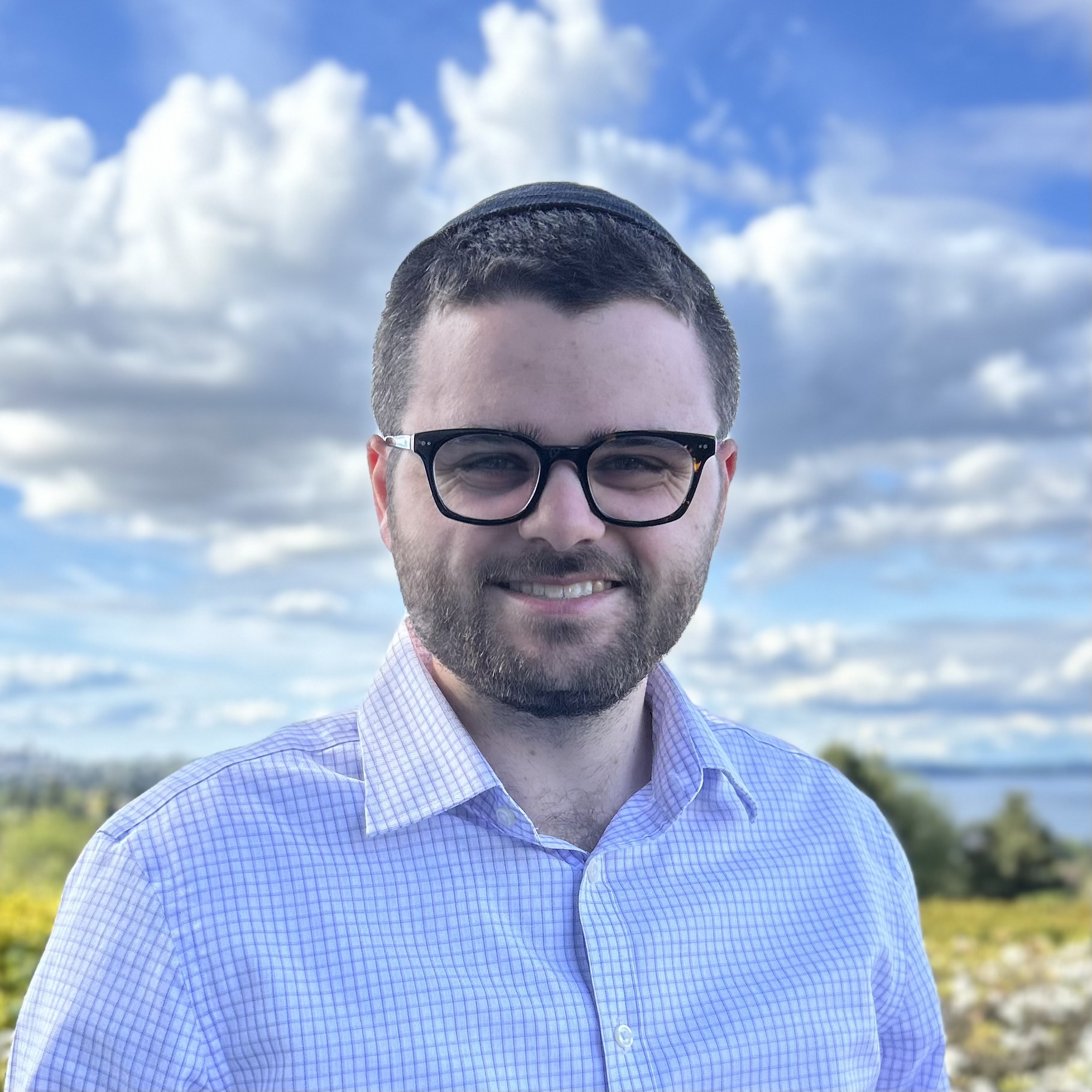

Several students were asked to share a few words about themselves and the importance of their Sephardic identities at this year’s award’s ceremony. Below you can find a few speeches from some of our student recipients
Thank you so much for these scholarship awards and for the opportunity to share a few words. First, a little bit about my background. I grew up in the Sephardic community in Seattle, Washington, where I attended Sephardic Adventure Camp for many years as a camper, a counselor, and then eventually as an education director. Sephardic camp was extremely influential in learning about and appreciating the value in Sephardic history, Halacha, and traditions.
I attended Yeshiva University, where I earned an undergraduate degree in philosophy. Afterward, I decided to stay to pursue two advanced degrees. I'm currently a student at RIETS, Yeshiva University's semikhah program, and Revel, its Graduate School of Jewish Studies. These studies have allowed me to grow in my understanding of Torah and Jewish history, both with a particular focus on the Sephardic world. I would like to share a short idea based on some of my research in Sephardic history. I find it very interesting; I hope you do too.
Recently I've been researching a Turkish rabbi named Yitzchak ibn Lev. He was born in Spain sometime around 1470, and after the expulsion he made his way to the city of Brusa, today known as Bursa in Turkey, the same city where my ancestors, the Maimon family, lived for generations. He served there as the Rosh Yeshiva, the head of the academy.
Very few writings of his exist. You can find a piece here and a piece there in other people's books, but he never published anything himself. Many of his writings, though, still exist in manuscript form, handwritten, and very hard to read. They're accessible through the National Library of Israel. You can take a look and read this Sephardic script, Hebrew, Ladino, other languages from hundreds of years ago. I've been going through and transcribing his responsa, his biblical interpretations, and other writings. In studying Ibn Lev and his works, I was left with one major question.
Why is he not more well-known? Why had I never heard of him? I came across his name just looking through a random document. Maybe I'm just biased because I've been studying him, but he seems to have been a truly great scholar. He earned the respect of his contemporaries and corresponded with many of the most important rabbis of his time, including Rabbi Yosef Karo and the Mabit. How is a person like that nearly forgotten from our history? We still have his works; he's not completely forgotten, but he's not a central figure.
In a way, the answer is simple. I think there are two points. He didn't serve as a chief rabbi anywhere; he didn't have an extremely prominent role in a community. And he didn't publish any books. Publishing books that last is how we remember these major figures.
But I think this just pushes the question back one level. Why didn't he take more prominent roles, and why didn't he write any books? A few months ago, I was reading one of his responsa and I came across an amazing line. I think it helps answer this question. As he's concluding the piece, he writes that he can't give a complete answer. He can't fully explain his reasoning. I don't think he was just lazy; I think he really meant this. He says he has more important things to do. He writes: "The sacred work of the difficult laws that we study with the students rests upon me." I can't respond to you because I'm learning really difficult stuff with my students, so I can only give a two-page response. He says: " I have many more proofs. Come and talk to me if you have time, but I can't write anymore." To Yitzchak ibn Lev, teaching his students was his primary responsibility. And investing in his students paid off. We might not know much about him, but many of his students became major communal rabbis in Bursa, Istanbul, and other cities. Many of their writings do survive to this day. He sacrificed the possibility of writing famous books or leading large congregations for the opportunity to teach his students.
This approach, prioritizing the education of the next generation, is exemplified in the Brotherhood scholarship program. The Brotherhood and all the donors have invested in a program that is entirely focused on assisting in the education of the next generation. I speak for all the scholars today when I say we truly appreciate it. It makes a difference in each of our lives individually, helping us to secure our future. It also serves as an investment in the future of our community more broadly. Your gifts and the education they support establish a knowledgeable and successful Sephardic future.


Comments